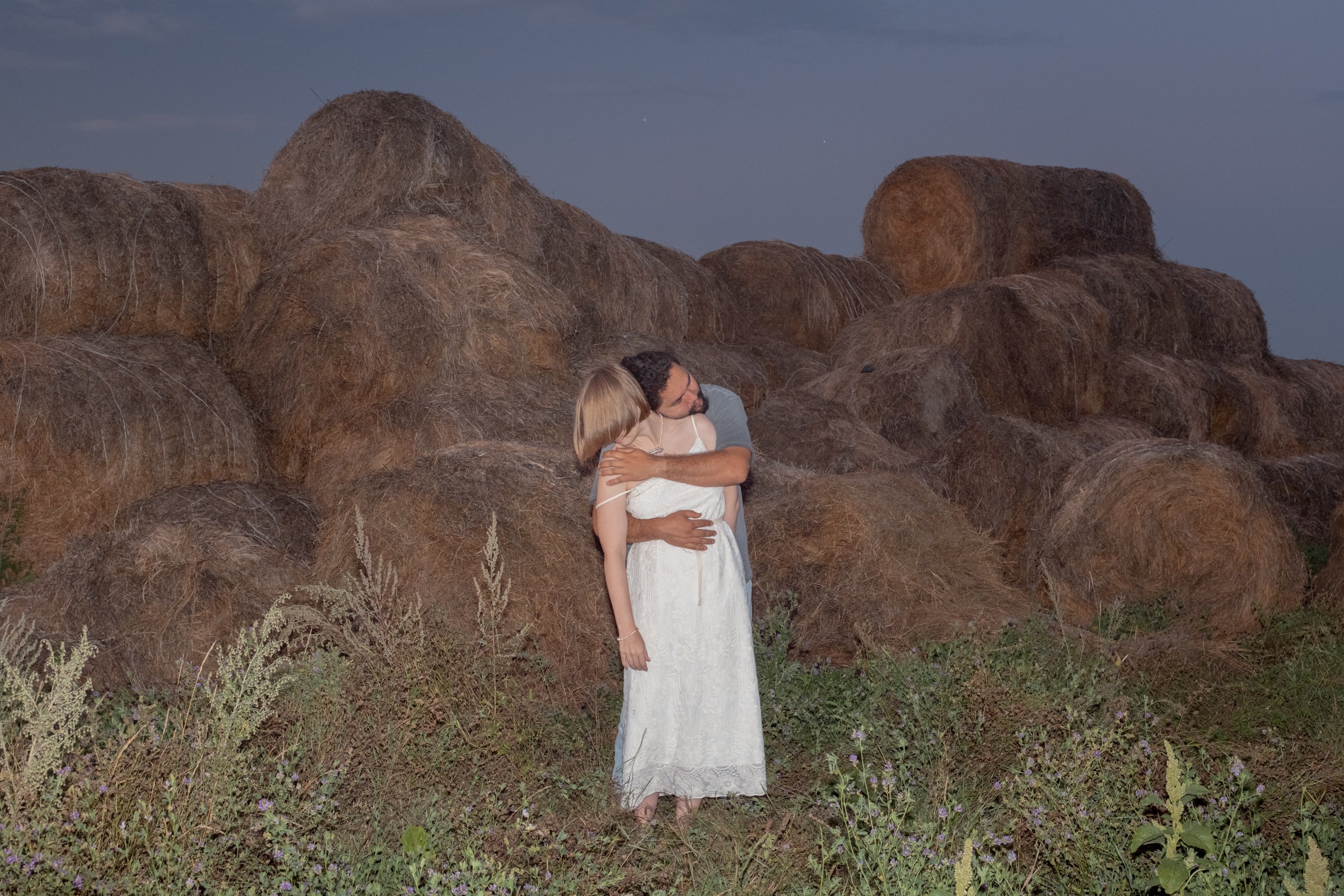
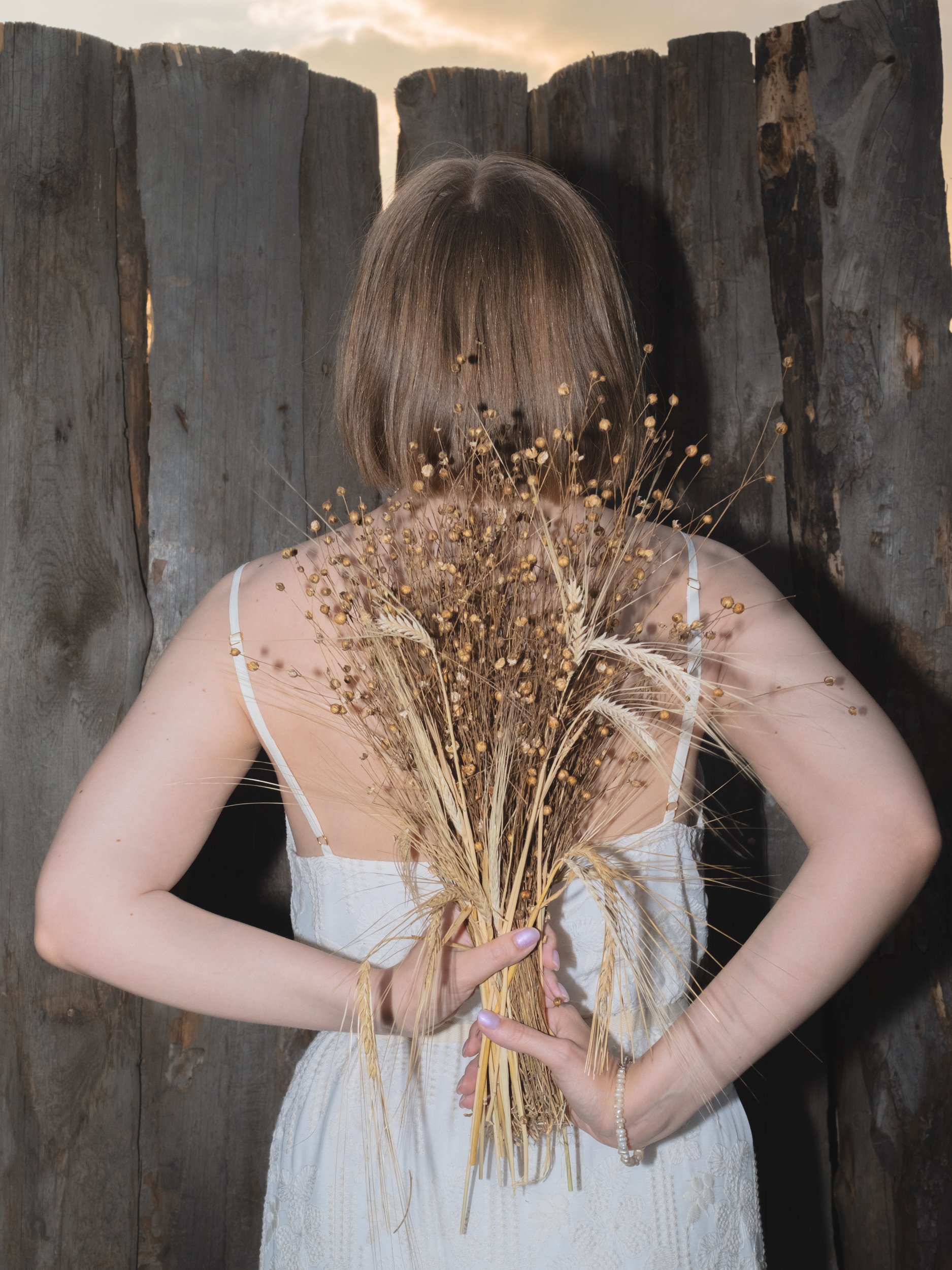
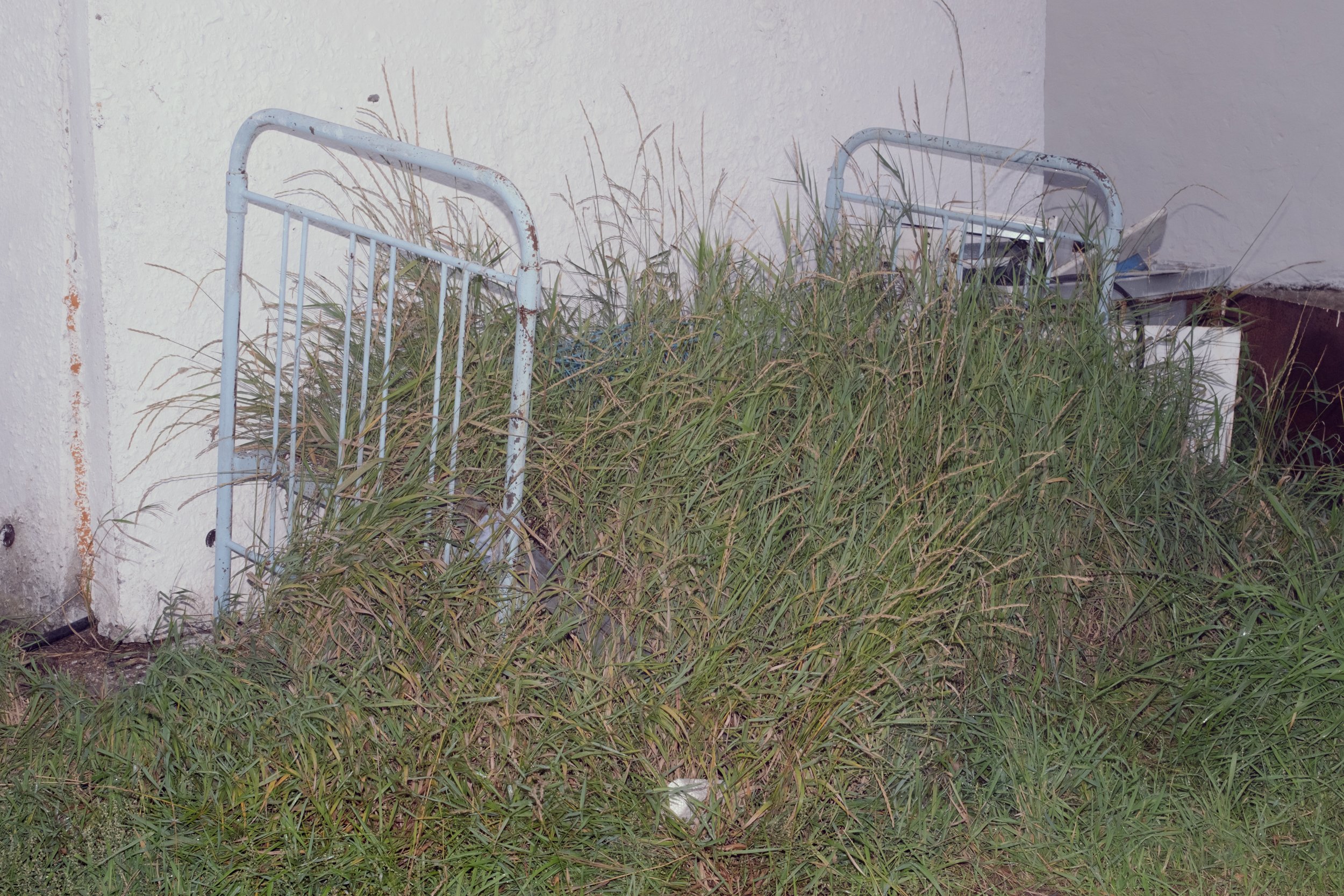
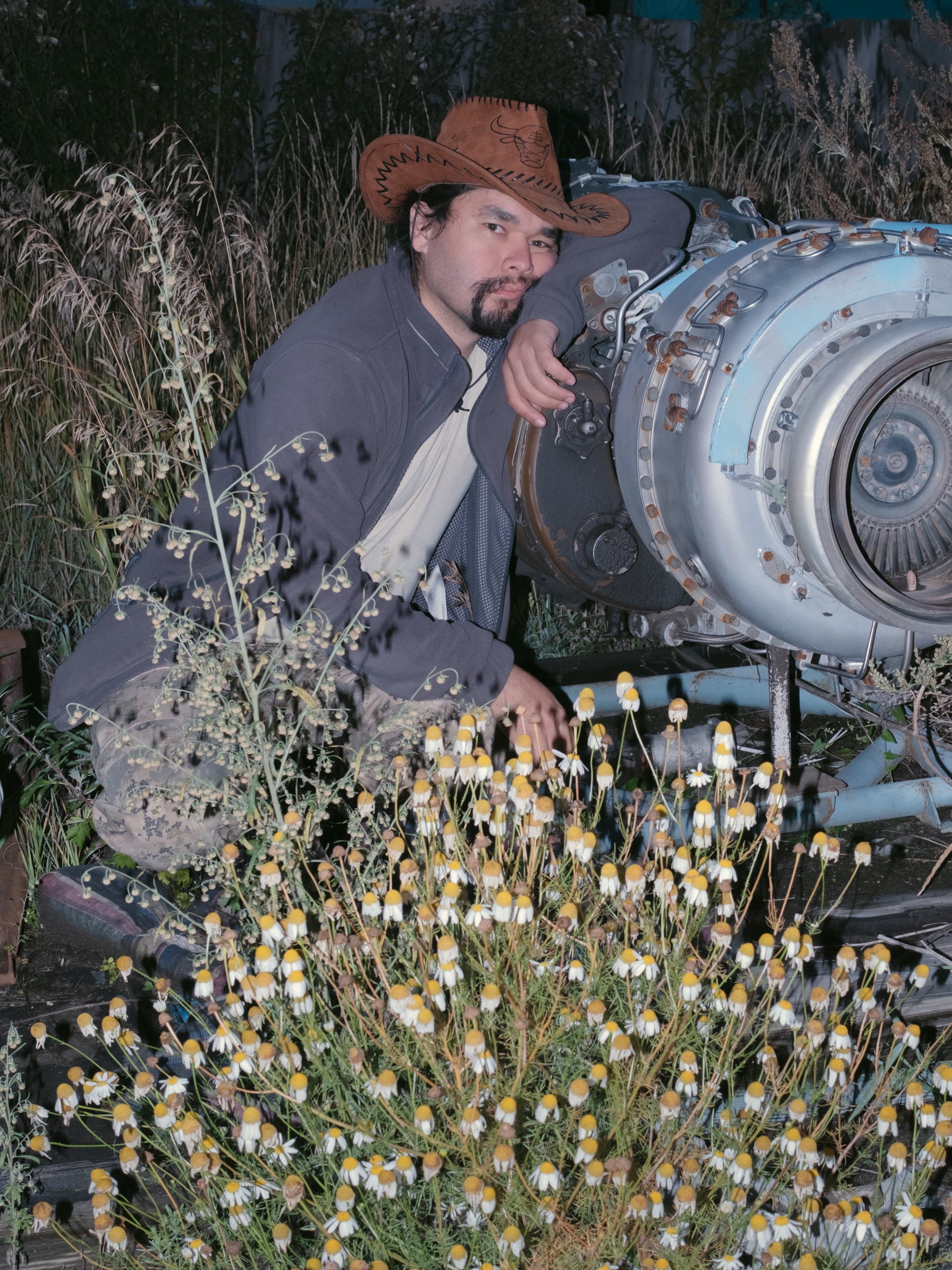
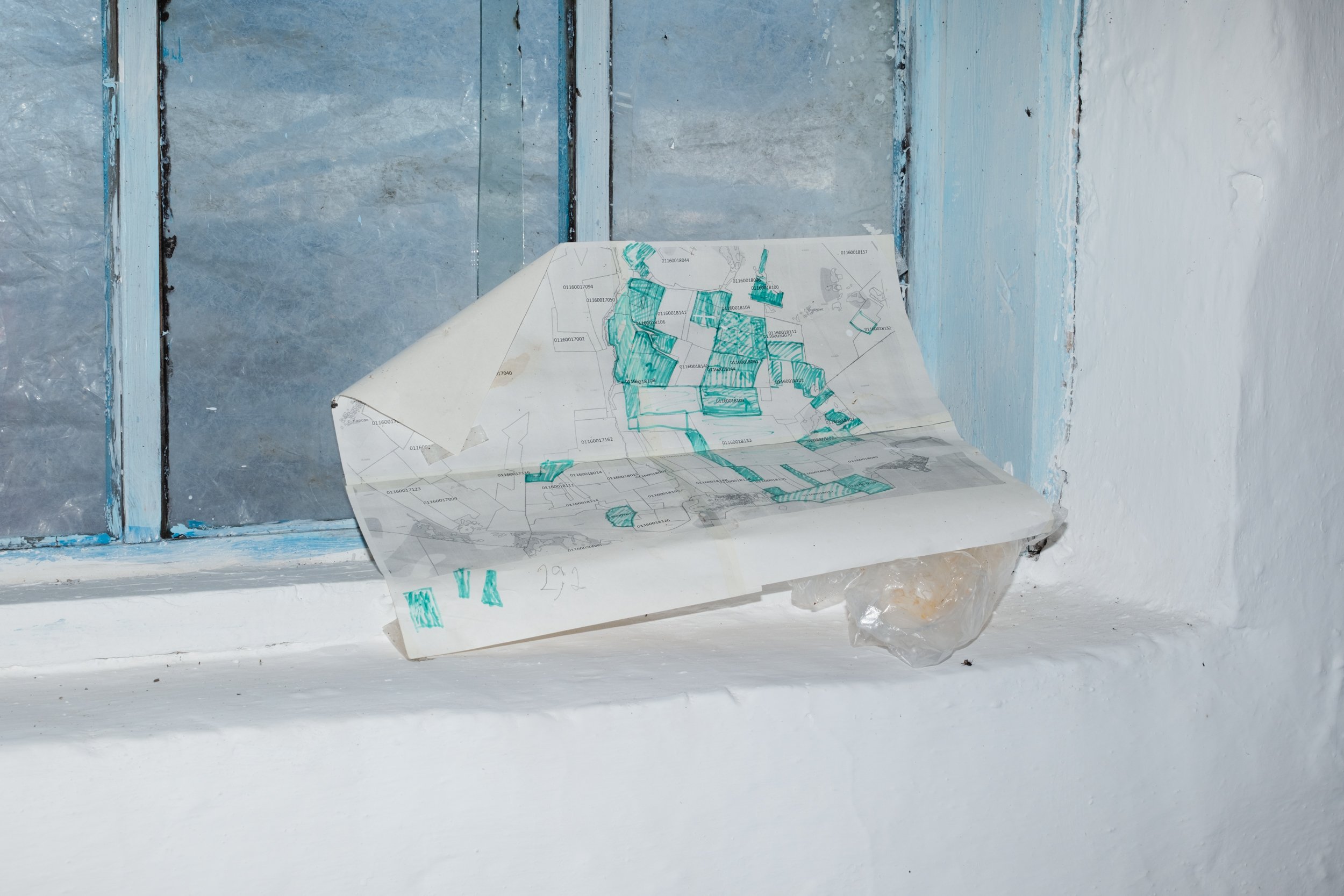
The #kolkhozcore project explores the erosion of self and sense of agency in heteronormative relationships. To be in a close relationship is, to some extent, to give up part of one’s freedom and to adapt to a partner’s needs and circumstances. For a woman in a patriarchal society, however, the boundary between this inevitable mutual adaptation and complete dissolution into her husband’s life becomes particularly porous.

More than thirteen years ago, I started dating a geneticist. We got married; then he decided to take over the family business – and so I unexpectedly became a farmer’s wife. His decision radically changed my life.

We moved to Kazakhstan, his home country. Every year he goes away for six months or more to the grain fields of his kolkhoz* in North Kazakhstan, while I stay in Almaty, thousands of kilometres away. He grows wheat, barley, flax, peas and lentils – just as his father did before him.

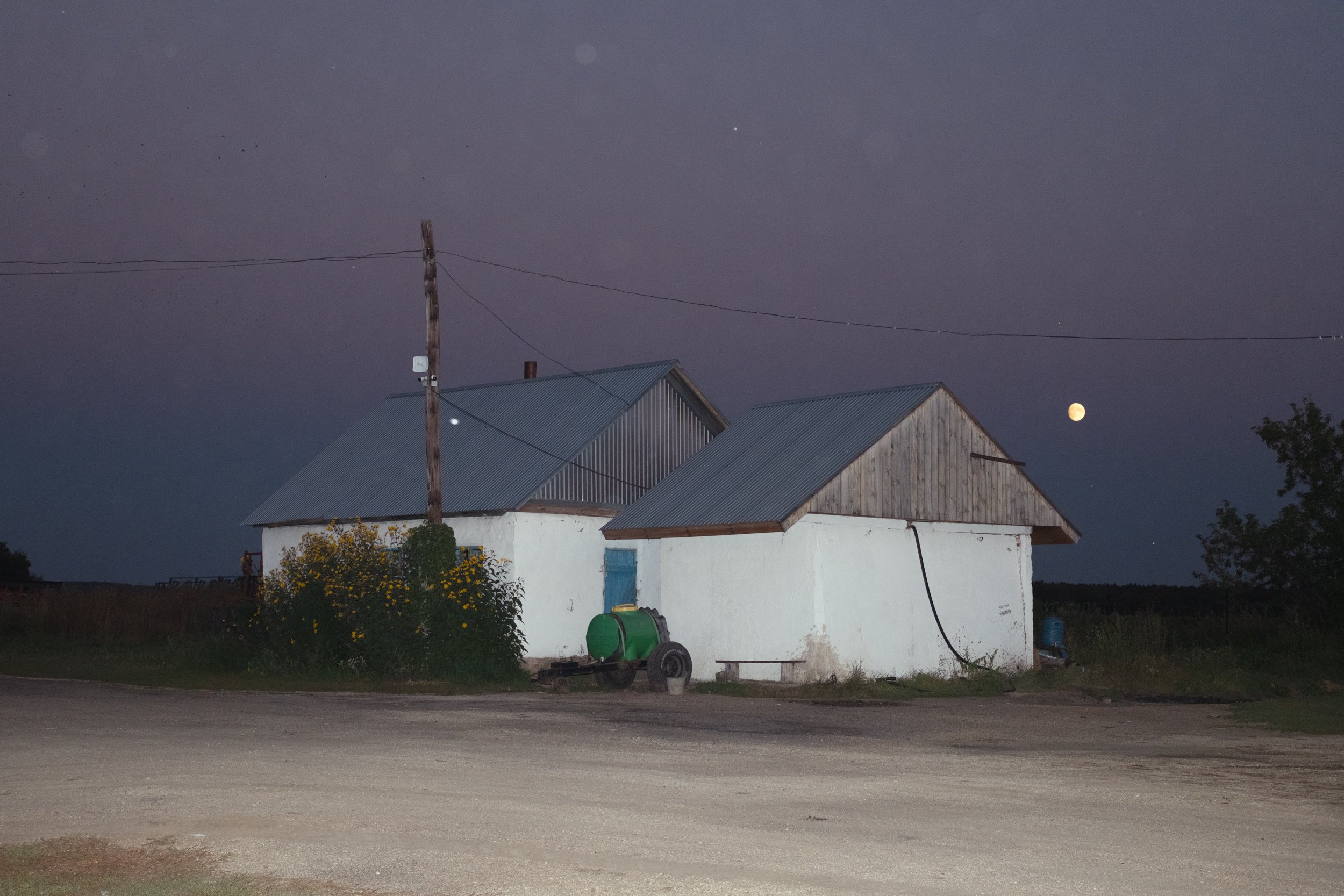
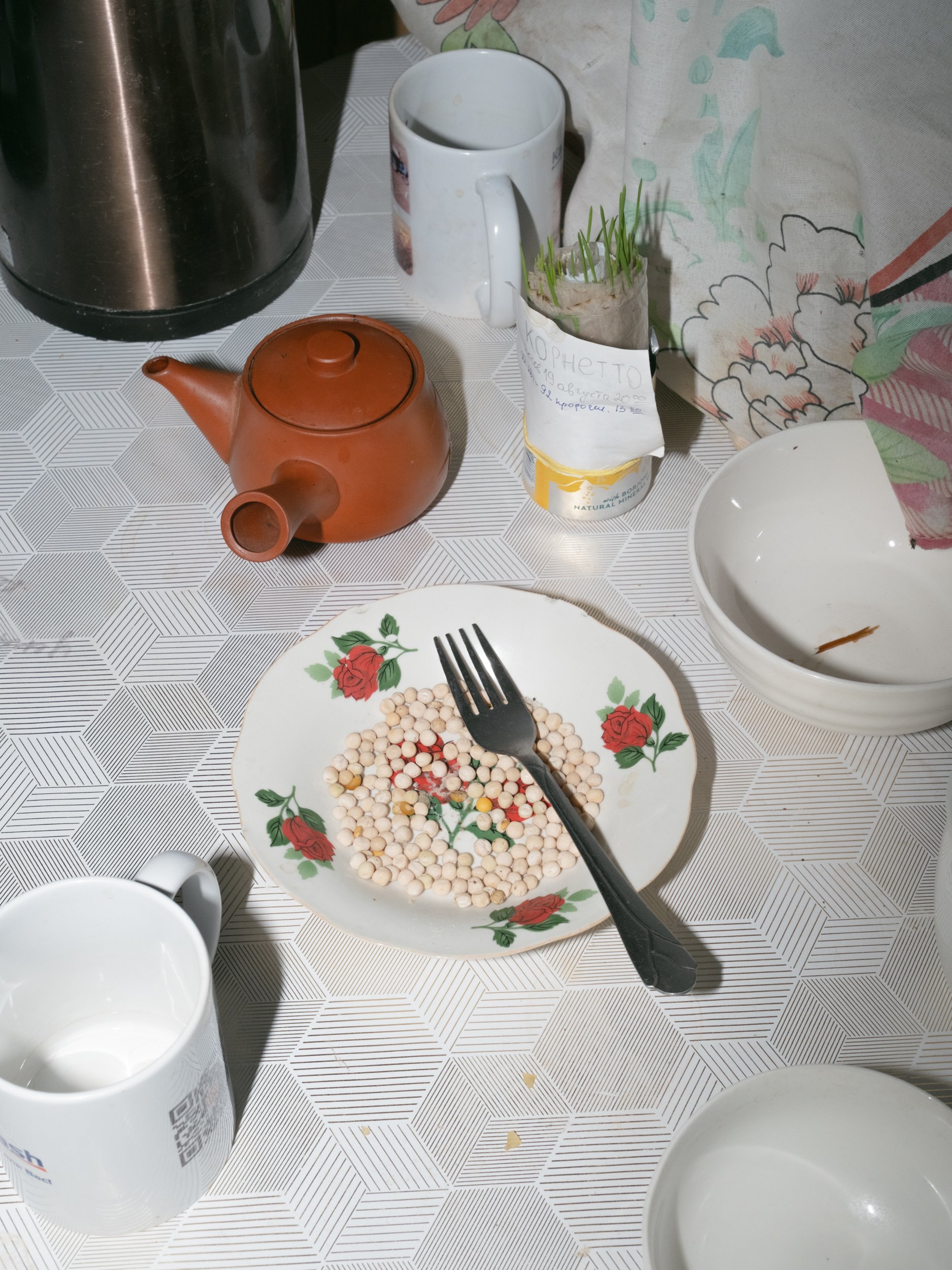
As the farmer’s wife, I wait. I get used to being alone, and when he returns, we have to learn to live together again. I visit him, stay in a log cabin next to the granary, and make his new house nearby feel like home. We talk about herbicide spraying, leaf rust on the wheat, quarrels among the machine operators, rain and drought. I support and console him when things don’t go as planned.

Rural Kazakhstan is conservative: a woman here is defined primarily through her role in the family. In this environment I live out the conflict Simone de Beauvoir described: like every subject, I experience myself as “the essential”, while my situation casts me as “the inessential” – the one who adapts, serves and alters herself for the sake of the other.

There are subcultures that romanticise the traditional rural way of life, or its aesthetic, such as #tradwife and #cottagecore. The #kolkhozcore project offers my view of the reality of kolkhoz life. When I pick up the camera and become the one who looks and examines, I feel as though I am reclaiming my agency. But is this enough to make me “the essential”?

* A kolkhoz was a collective farm in the Soviet Union, including Soviet Kazakhstan. Although these farms were privatised after independence, people there, my husband among them, still use the word to refer to any farm.